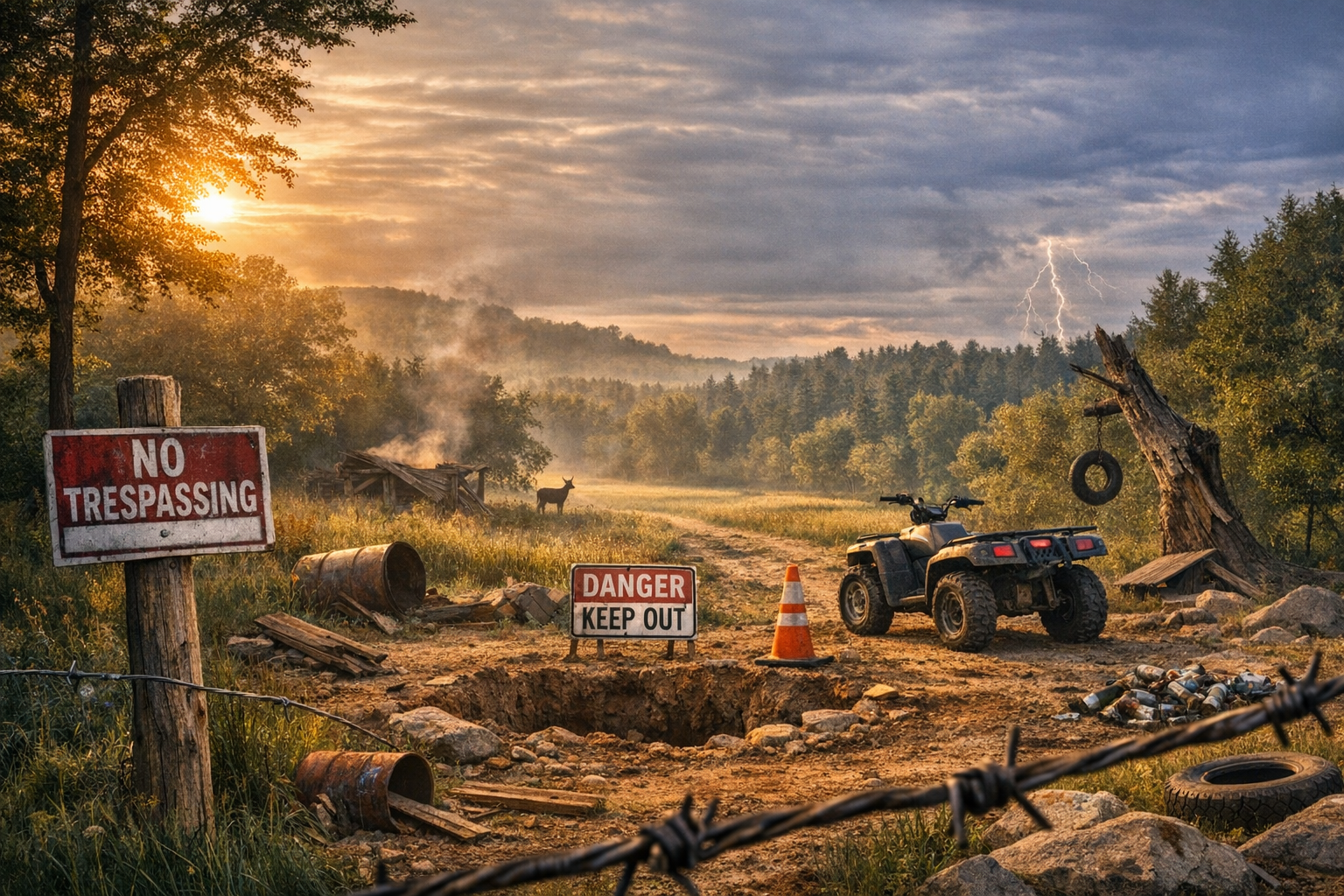
When most people think about property insurance, they picture homes, buildings, or businesses—places filled with activity, belongings, and obvious risks. Vacant land, by contrast, seems simple and harmless. After all, if nothing is built on it, what could possibly go wrong? That assumption is exactly why so many landowners overlook an important layer of protection.
Vacant land carries its own set of liabilities and financial exposures, even when it appears untouched. Whether you own a small parcel or a large rural tract, having the right insurance in place can protect you from unexpected costs and legal challenges.
One of the biggest misconceptions is that vacant land is risk‑free simply because no one lives there. In reality, you can still be held responsible if someone is injured on your property. People may wander onto the land without your knowledge—hikers, neighbors, hunters, or recreational users. Even trespassers can trigger liability if they’re hurt by uneven terrain, fallen branches, hidden holes, or other natural hazards. Without insurance, you could face medical bills, legal fees, or settlements that come out of your own pocket.
Nature itself can also create problems. Wildfires, storms, flooding, and erosion can change the condition of your land in ways that increase your liability exposure. A fallen tree or washed‑out area might not damage a structure, but it can create dangerous conditions that lead to accidents. Insurance can help cover cleanup, address hazards, and protect the value of your investment.
If you plan to develop the land in the future, securing insurance early is a smart move. It provides protection during the planning phase, covers liability for visitors or contractors, and ensures you’re prepared once construction begins. In many cases, lenders require insurance before they’ll approve financing for development, so having coverage in place can streamline the process.
Another reality many landowners overlook is how often vacant land is used without permission. People may treat it as a convenient spot for walking dogs, riding ATVs, camping, or exploring. Even if you’ve never granted access, you may still be responsible for what happens there. Insurance helps close that gap and gives you peace of mind.
The good news is that insuring vacant land is typically affordable. Because there are no structures to protect, the cost is primarily tied to liability coverage. For a relatively modest premium, you gain significant protection against risks that could otherwise become costly surprises.
Vacant land may look quiet and uncomplicated, but the responsibilities of ownership are very real. Property insurance helps safeguard your investment, protect you from liability, and support any future plans you may have for the land. It’s a simple step that can make a meaningful difference in your long‑term financial security.
Some Real-World Examples of Claim Scenarios
Injury from a fall on undeveloped land: Legal analyses describe situations where someone trips in a hole, on unstable soil, or on leftover debris on a vacant parcel and sues the owner for failing to maintain safe conditions.Injuries during recreational use: Vacant land often attracts hikers, ATV riders, or hunters. If someone is injured due to a hazard the owner knew about, they may pursue a claim for medical bills, lost wages, and legal costs.
Dog bites or animal‑related injuries: Even on undeveloped land, if an owner’s animal injures someone, it can trigger a premises liability claim.
Why These Cases Succeed
Across multiple legal sources, successful claims tend to involve the same core elements:- The landowner had a duty of care toward the injured person.
- The owner failed to warn about or fix a dangerous condition.
- The hazard directly caused the injury.
- The injured party suffered actual damages (medical bills, lost wages, etc.).
- Even on vacant land, these elements can be met.
By taking the step to insure your property, you safeguard your investment, reduce your risk, and ensure that your land—whether held for recreation, long‑term value, or future development—remains an asset rather than a source of stress.