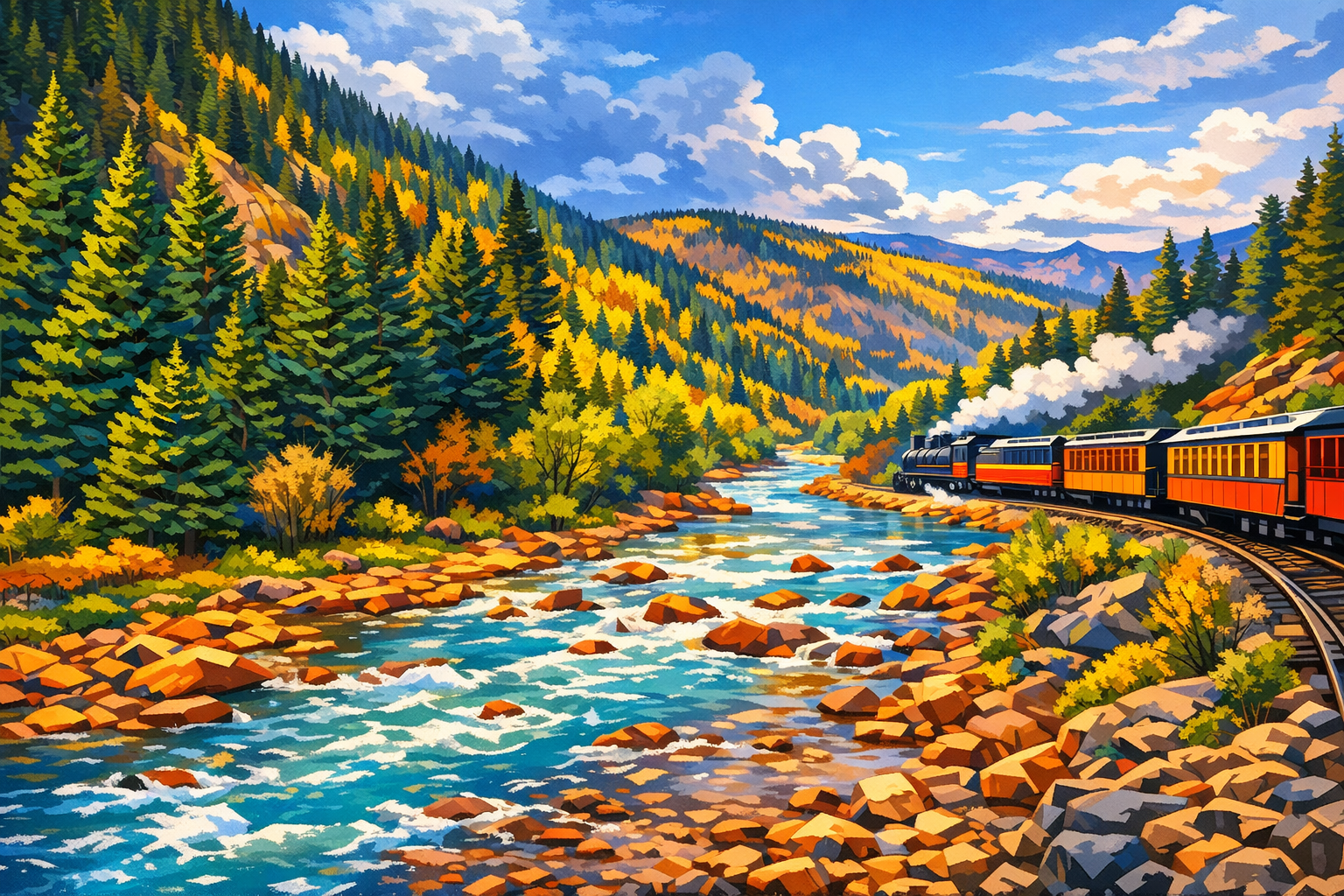
There are towns you pass through, and then there are towns that pull you in by the collar. Durango, Colorado is the latter — a place where the past doesn’t just linger, it breathes. Tucked into the Animas River Valley and framed by the San Juan Mountains, Durango is a crossroads of history, culture, and landscapes that feel almost mythic.
Spend a weekend here and you’ll understand why people fall hard for this corner of the Southwest.
Farmers Market
Located in the center of town, this is where Durango shows you who it is. On Saturday mornings, the Durango Farmers Market unfolds like a community celebration: bakers selling loaves that vanish before noon, herbalists, potters, musicians, and friendly dogs that seem to know everyone by name. You can find great sandwiches here and some of the best produce in the country, especially the tomatoes.Durango & Silverton Narrow Gauge Railroad
Adjacent to the parking lot where the farmer's market is held, is the railroad stop where you can get on a train for an exciting ride. This steam-powered train has been running since 1882, climbing through canyons and along cliff edges that make you question your life choices in the best possible way. The route to Silverton is a moving postcard — pine forests, waterfalls, the Animas River flashing below you like a silver ribbon. It’s not just a ride. It’s a reminder of how people once moved through this landscape: slowly, deliberately, with awe.Historic Strater Hotel
Walk a few blocks from the market and you’ll hit the Strater Hotel, a Victorian brick beauty that looks like it was teleported straight out of 1887. Inside, it’s all carved wood, velvet wallpaper, and the kind of ornate details that make you wonder how many stories these walls have overheard.The Strater isn’t just a hotel — it’s a stage. Writers, musicians, railroad workers, and wanderers have passed through its rooms for more than a century. Even if you’re not staying the night, step inside the lobby. You’ll feel the shift immediately: the hush, the history, the sense that you’ve crossed into a different era.